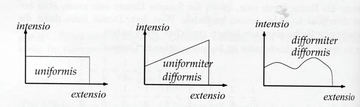
As noted in the last episode, mathematical activity effectively died out in Europe during the Early Medieval Period. A couple of late classical philosophers such as Boethius (480–592), Cassiodorus (c. 485–c. 585), and Isidore of Seville (c. 560–636), whose worked lived on into…
I have been fascinated by numbers for as long as I can remember. I have very strong memories of enthusiastically solving simple arithmetical problems at the age of four in my first year at primary school. Rushing through each exercise to get to the next one. Later as I got older…
Having looked at the various developments of the method of exhaustion as produced by the ancient Greeks and independently by the ancient Chinese, which can seriously be considered as a sort of proto-integral calculus, we then turned briefly to look at the extraordinary…
Before the proportional compass, there were the proportional dividers, better known as the reduction compass. This was a much simpler instrument but it also worked on the same Euclidian theory of proportion applied to isosceles triangles. A normal pair of dividers has two legs…
Once again this will be a post outside of the mainstream of the historical evolution of calculus. It is also another example of an independent parallel discovery in the history of mathematics, this time in medieval India. More specifically the so-called Kerala school of…
Dennis Danielson and Christopher Graney are two of my favourite historians of astronomy. Danielson is the author of the excellent biography of George Joachim Rheticus (1514–1574), The First Copernican: Georg Joachim Rheticus and the Rise of the Copernican Revolution (Walker &…
We have been looking at the historical development of the method of exhaustion in Ancient Greece and China. Parallels are often drawn, not incorrectly, between the method of exhaustion and integral calculus. However, there are important differences between the two mathematical…
I done fucked up! In the last post in this series I stated that Zu Chongzhi’s determination of the value of Pi was the most accurate until the sixteenth century and the determination of the German-Dutch mathematician Ludolph van Ceulen (1540–1610). This is complete rubbish! I…
Before the publication of Sidereus Nuncius in 1610 launched him into European scientific superstardom, Galileo Galilei (1564–1642) was a comparatively unknown professor for mathematics at the University of Padua. He had a reputation in Northern Italy as a highly intelligent…